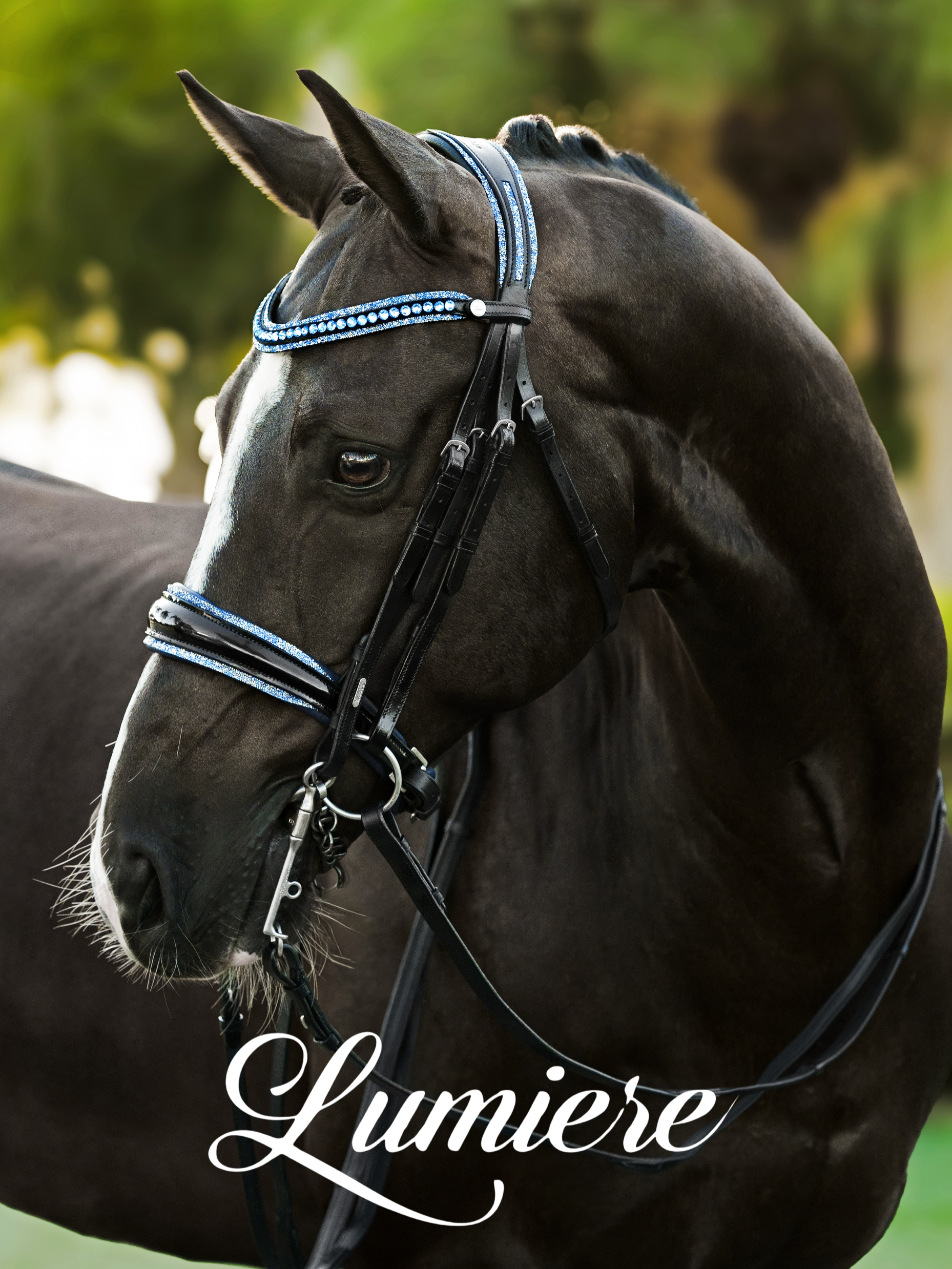
Why bridle fit matters just as much as saddle fit
Most riders spend hours getting a saddle fitted. It’s re-checked every season, adjusted after a change in the horse’s condition, sometimes reflocked mid-competition year. But ask the same rider when their bridle was last properly checked, and you’ll often get a shrug.
That’s a problem – because a poorly fitted bridle can cause just as much discomfort, tension and behavioural fallout as a poorly fitted saddle. The difference is that bridle fit issues are harder to spot. There’s no obvious dry patch or white hair to point to. The signs are subtler: a horse that won’t stretch into contact, head tossing, ear pinning at girthing or bridling, or a subtle unevenness in the bit contact that never quite resolves no matter how it’s tweaked.
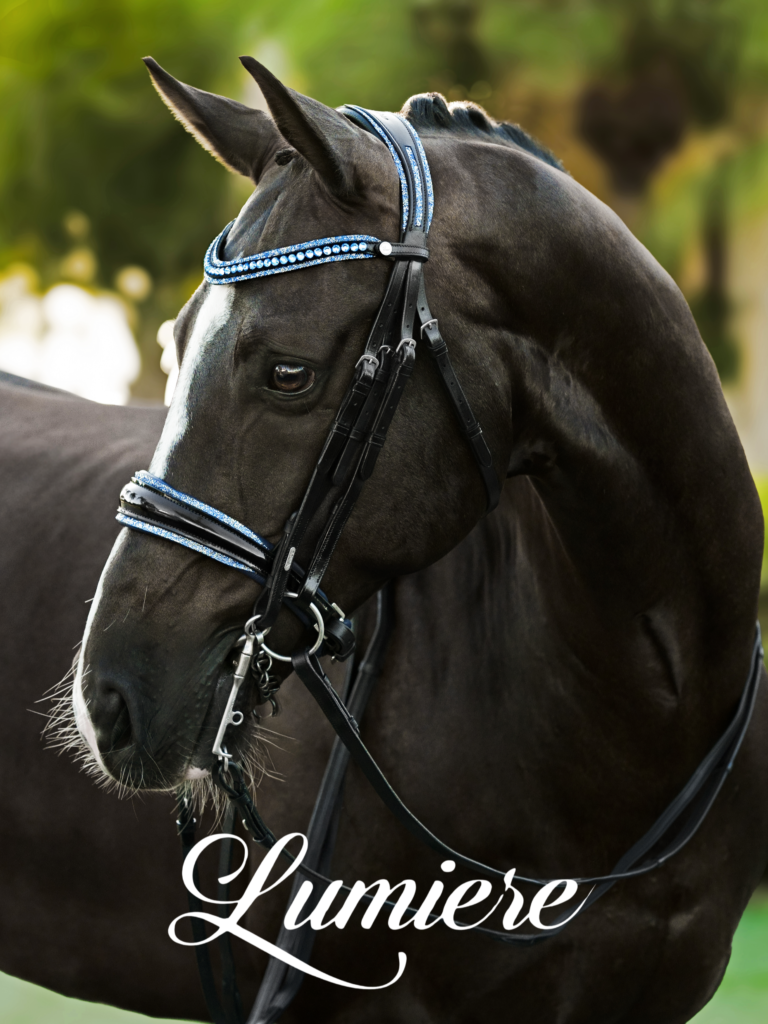
The horse’s head is more sensitive than you’d think
The horse’s poll, jaw and nose are dense with nerves and sit close to the bone with very little padding in between. A browband that’s a touch too tight can pinch at the base of the ears with every stride. A noseband set too low can interfere with the sensitive nasal cartilage and restrict breathing. A cheekpiece that sits unevenly can rotate the bit in the mouth and put pressure exactly where it shouldn’t be. None of this shows up as a visible sore in the way an ill-fitting saddle might – but it’s every bit as real to the horse.
The areas of bridle fit worth checking
Browband width and shape. Too narrow, and it pulls the cheekpieces forward into the base of the ears. Too wide, and the bridle sits loosely and rubs.
Noseband placement. As a general guide, two fingers should sit comfortably between the noseband and the nasal bone, positioned well clear of the sensitive cartilage further down the nose.
Cheekpiece length and symmetry. Uneven cheekpieces are one of the most common, and most overlooked, culprits behind a horse that won’t take an even contact.
Throatlatch clearance. It should allow a full fist of space at the throat so the horse can flex and breathe freely at the poll.
Poll padding and browband curve. The poll is one of the highest-pressure points on the whole bridle; a bridle with a shaped, cushioned crownpiece distributes that load far more evenly than a flat strap.
Buckle position at the jaw. It’s worth checking that no buckle, particularly on the cheekpieces or noseband, sits directly over the temporomandibular joint (TMJ), where the jaw hinges just below the ear. This is a high-motion, pressure-sensitive joint, and a buckle pressing on it can restrict the horse’s ability to flex and chew comfortably through the jaw, which can show up as resistance in the contact or general jaw tension.
Just like saddle fit, none of this is a “set and forget” job. Horses change shape through the seasons, through work, through age – and a bridle that fit perfectly in spring can be pinching by autumn.
Bridles built with fit in mind
At Lumiere, we design every bridle with these pressure points front of mind – anatomic shaping where it counts, quality leather that keeps its shape, and detailing that doesn’t compromise on comfort for the sake of good looks. · The Paris Bridle – one of our most eye-catching designs, with fine detailing and a flash of crystal, built on the same anatomically shaped foundation as the rest of the range. Proof that fit and flair aren’t mutually exclusive. · The Mila Bridle – a fully anatomic design, with a contoured crownpiece and curved noseband shaped to sit clear of pressure-sensitive areas across the poll and nose. · The Pippa Bridle – a bestseller for a reason: classic with a touch of extra elegance, versatile, and finished with the same considered shaping riders have come to expect from Lumiere.
A well-fitted bridle should be something you and your horse forget about the moment you’re in the ring, not something either of you is working around. If you’re due a fit check, it’s worth building it into the same routine as your next saddle fitting. Browse the full range at lumiereequestrian.com.